


“It’s been a long road,” lawyers for both sides told the jury as they began their closing arguments in the historic Live Nation antitrust case.
After nearly six weeks of testimony that featured executives, venue operators, economists, and artists from across the live music world, the fate of Live Nation Entertainment and its wholly owned subsidiary Ticketmaster now rests with a jury, which will decide whether the most powerful company in live entertainment has formed an illegal monopoly.
“I am honored to stand before you on behalf of 34 different states across the country,” Jeffrey Kessler, lead trial counsel for the plaintiff states, said. These states, from Florida to Vermont, “might not agree on a lot of things, but they agree on this.”
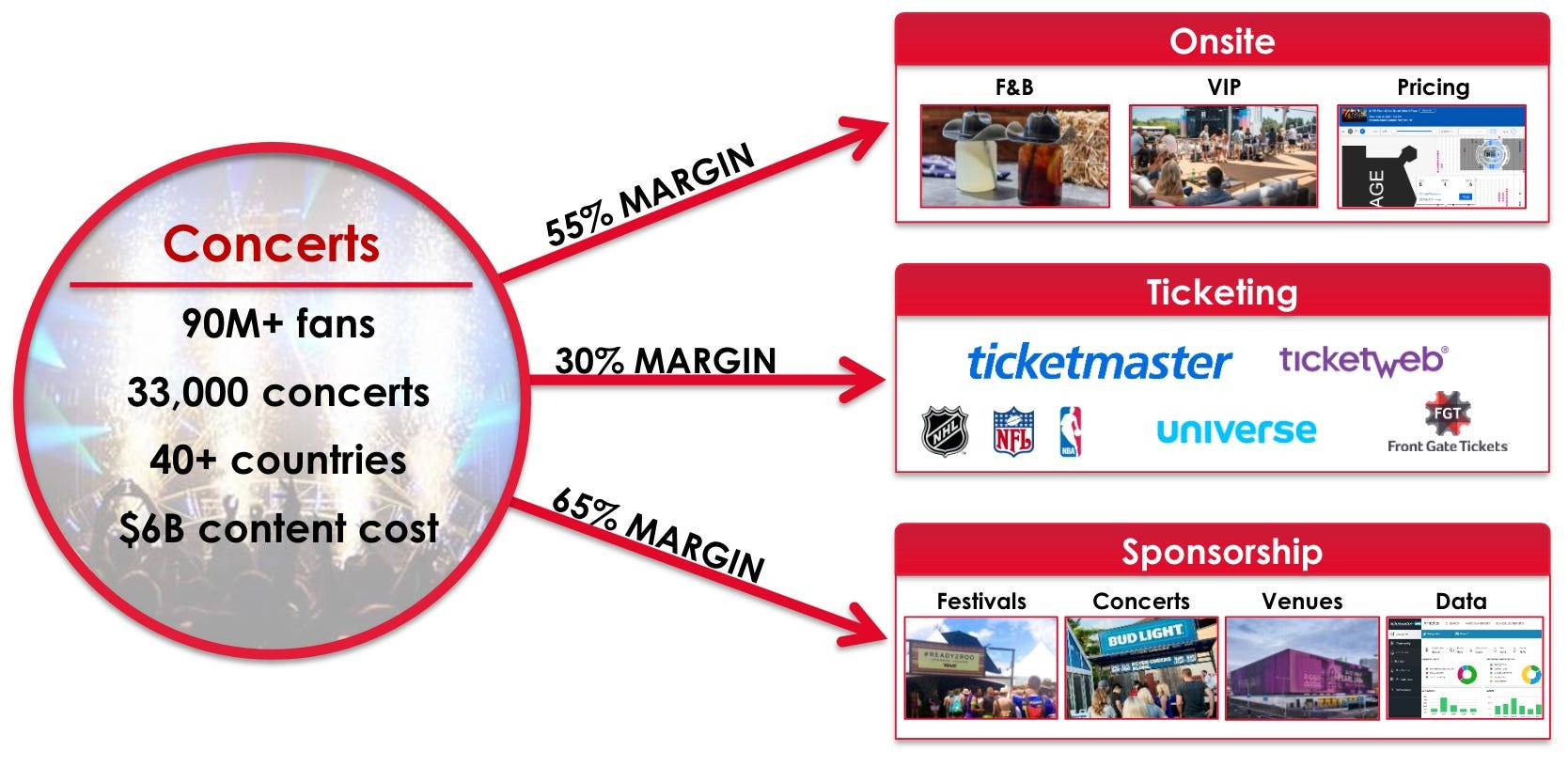
That agreement has formed the backbone of the plaintiffs’ case that Live Nation and Ticketmaster dominate three connected markets: primary ticketing at major venues, primary ticketing for concerts at those venues and the control of large amphitheaters.
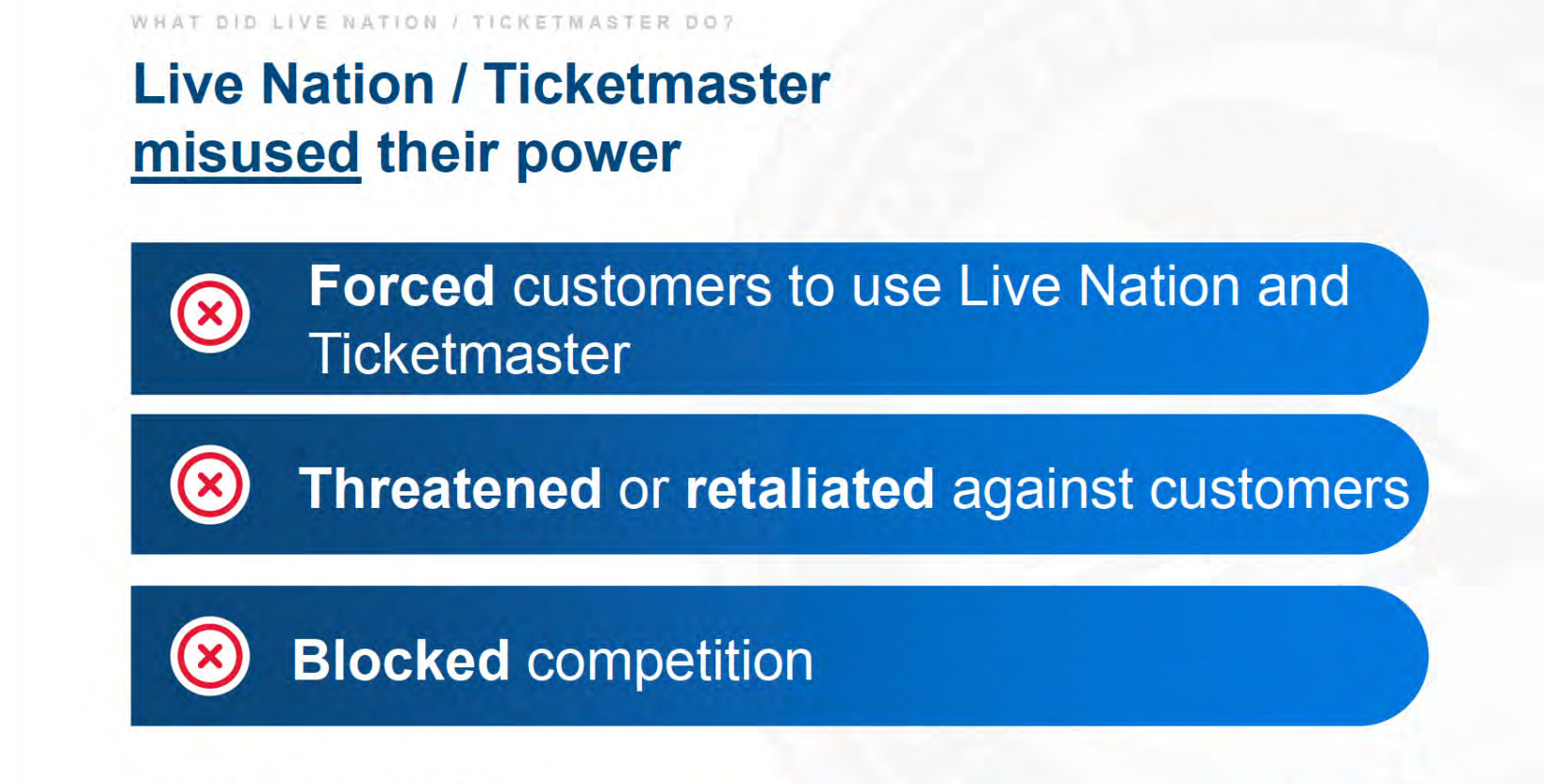
The plaintiffs have argued that in these major concert venues, Ticketmaster and Live Nation intentionally acted in ways that are anticompetitive—locking up venues with long-term, exclusive contracts and conditioning Live Nation concerts on venues’ use of Ticketmaster.
Ticketmaster’s Dominance in Major Concert Venues
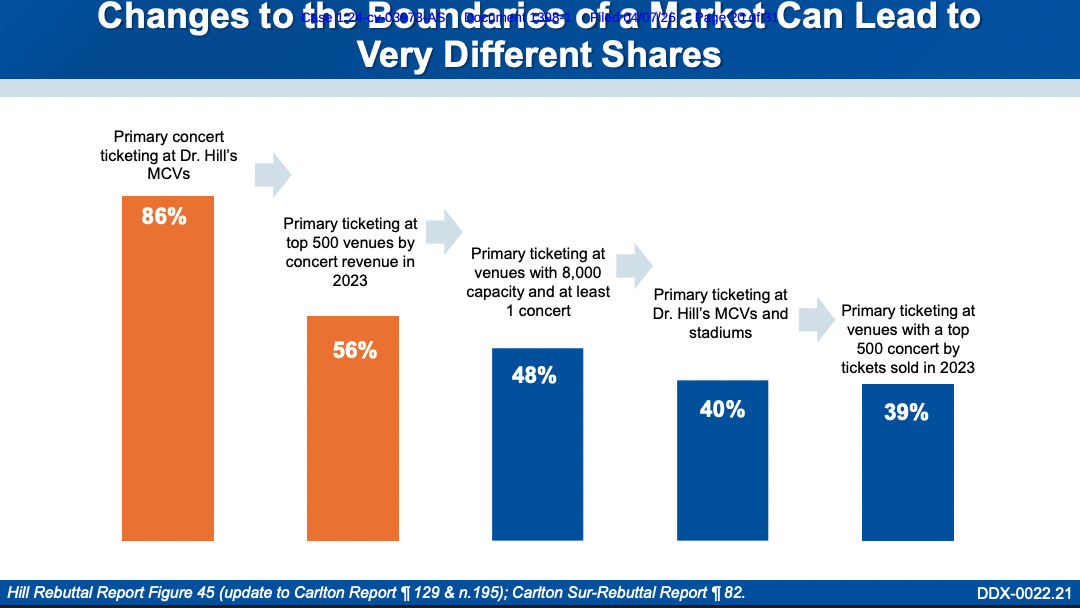
There is little dispute about Ticketmaster’s scale in this alleged market. It controls 86 percent of ticketing contracts for concerts at major concert venues and 73 percent of all ticketing contracts across content types at these venues. Its contracts are typically long-term, averaging about five years, and exclusive. Employees are incentivized with bonuses tied to renewals and contract length, and venues are often offered financial inducements for early renewal.
Ticketmaster’s internal incentive structure, shown to jurors, included escalating bonuses tied to longer contract terms, with higher multipliers for extended deals.
The Helper: Oak View Group
Ticketmaster’s control over venues is reinforced through its relationship with Oak View Group, a venue management company that acts as an intermediary in its alleged monopolistic scheme. In 2022, Ticketmaster signed a 10-year agreement with OVG requiring the company to push the over 200 venues it manages toward adopting Ticketmaster as the exclusive provider, even as it remains formally obligated to act in the venues’ best interests. At times OVG did not tell its managed venues about the conflict of interest or its internal analyses that concluded that Ticketmaster’s terms could leave venues financially worse off.
(On midday Friday, after closing arguments, the jury asked to see a transcript of OVG President Chris Granger’s testimony).
Ticketmaster Retaliation and Quality
Kessler also spent time discussing what he described as retaliation against venues that moved away from Ticketmaster. According to plaintiffs’ expert Nicholas Hill, from 2017 through 2024, venues that moved away from Ticketmaster saw Live Nation shows decline from an annual average of 17 concerts in the last year of their contracts to 11 in the year after switching; those that moved to Ticketmaster saw shows rise from 14 to 27.
Nowhere was this claim more pointed than at Barclays. If you’ve been reading, you’ll know that central to the claim about retaliation over leaving Ticketmaster is the Barclays fiasco in which Barclays left Ticketmaster for SeatGeek in 2021, a decision that provoked alleged threats and retaliation from Live Nation, only to return two years later. Hill found that Barclays saw a sharp drop in Live Nation shows when it left Ticketmaster and a rebound when it returned to Ticketmaster the following year.
But, throughout the trial and in its closing argument, Live Nation portrayed Ticketmaster as a high-quality ticketing service. Lead trial counsel David Marriott argued that Ticketmaster’s market position reflects the strength of its product. Over the course of 20 years, Ticketmaster has been building itself into a premier ticketing service, and a number of venue operators have streamed through the courtroom over the past several weeks to testify to this effect.
Even the chief entertainment officer at Barclays testified that during the time of the switch she feared all promoters — not just Live Nation — would bring less content to Barclays because SeatGeek had worse performance than Ticketmaster.
Amphitheaters, Lawn Chairs and “Robbing Them Blind”
Perhaps Live Nation’s Achilles’ heel will be its amphitheaters. Of the 87 large amphitheaters in the U.S., Live Nation owns or exclusively operates 78 percent. Plaintiffs argue that the company uses that control to limit competitors, allowing only Live Nation-promoted artists to perform at those venues.
Kessler returned repeatedly to internal company communications shown at trial, many of which discussed amphitheaters. Jurors heard phrases like “incredible moat around the castle,” “velvet hammer,” “crush the competition,” “we alone can move the market,” and “boil the frog.”
“Who talks like this?” Kessler asked. “The answer, I think you will find, is a monopolist.”
These phrases, several of which were quotes from Live Nation CEO Michael Rapino or other company executives, are damning. Though small anecdotes, these moments visibly struck the jurors when read at trial. Amphitheater managers joked about hiking the prices of parking, which they could do without any fan pullback, referring to it as “robbing them blind, baby.”
Earlier in the trial Marriott argued that these parking costs were extra and only for those who wanted VIP parking. But it was revealed that Live Nation banned outside lawn chairs at its amphitheaters, forcing customers to pay $15 or watch a show without a chair, something that earned Live Nation $7 million in profits across just 15 amphitheaters in a year. Kessler relished lingering on these greedy details.
In his closing, Marriott downplayed such language as corporate bravado: “This is a case now about lawn chairs and parking. That is what they are. That is what they’ve gone to, focusing on lawn chairs and parking,” he said. He asserted that referring to “robbing them blind” in connection with amphitheater parking, while perhaps an unfortunate choice of words, was hardly egregious when amphitheater parking is less than a quarter of what fans pay to park at the world-famous music festival, Coachella, which is ticketed by AXS.
As for phrases like “crushing the competition,” Marriott offered little justification but likened this language to the terminology used among underage rivals at little league games.
Relevant Markets?
Ultimately, whatever the jury makes of Live Nation’s market power or alleged anticompetitive conduct, it must first decide whether the markets defined by the plaintiffs actually exist (primary ticketing for all events, including sports, at major concert venues; primary ticketing for concerts only at major concert venues; and the artist-amphitheater market).
The plaintiffs’ definition of major concert venues is limited to arenas and amphitheaters with at least 8,000 seats and a minimum number of concerts each year. Stadiums, they argue, are too large and too infrequently-used for concerts to serve as meaningful substitutes, while smaller theaters cannot accommodate the scale of major touring acts.
Amphitheaters, Kessler claimed, are distinct in their outdoor configuration and the types of content they attract. Certain artists only perform in amphitheaters or structure their tours specifically around amphitheaters. It has not been disputed throughout the trial that an artist cannot conduct a nation-wide amphitheater tour without Live Nation.
Notably, antitrust trials are not a search for some “one true” market definition. As another judge wrote in the context of a grocery store merger, “[t]he fact that a different market could be drawn” is not fatal for a plaintiff’s case; the question is whether the market proposed is “an appropriate and relevant market” for the case at hand. Market definition is a tool for getting a ballpark sense of competitive intensity.
Live Nation called the States’ market definitions “gerrymandered.” Its lawyers contend that venues, artists and promoters operate across a fluid range of options — stadiums, arenas, theaters and amphitheaters — that compete with one another in ways the plaintiffs’ definition obscures.
“If Ticketmaster were a monopolist, really, genuinely, as they suggest, then what these plaintiffs would be telling you is that Ticketmaster monopolizes ticketing for large venues. It would be that simple…That’s not what they’re telling you,” Marriott said. He went on to mock the extravagantly intricate particulars of the way in which he claimed the plaintiffs carved out the definition of market.
Marriott also pointed to what he suggested were inconsistencies in the plaintiffs’ approach to market definition. At times, the market includes all events at major venues, including sports; at others, it is limited to concerts. At times, arenas and amphitheaters are treated as a single market; at others, arenas are said not to be meaningful substitutes for amphitheaters.
An Unexpected Attendee
After the sides concluded their arguments yesterday, the judge went through the seemingly never-ending charging sheet followed by the verdict form.
Nearly all lawyers on both sides left the gallery when Judge Subramanian began this process. However, in the third row of the plaintiffs’ side sat one lawyer alone: David Dahlquist. Dahlquist was the plaintiffs’ chief counsel until the DOJ decided to settle with Live Nation, reportedly at the direction of President Trump. The day before closing arguments, Dahlquist announced his resignation from the DOJ. He watched all day yesterday as the states concluded the case he helped bring.
By the end of the day Friday, the jurors had selected their foreperson and submitted a series of questions, ranging from expert testimony to guidance on interpreting the definition of relevant antitrust markets. They also asked whether the States have to prove every prong of a Section 2 claim or just some (and were told yes, the States have to prove every prong). Does that mean the jurors agree on some central proof points but are deadlocked on others? Or were they just asking for clarification early in their deliberation process?
The tired trial teams will be left speculating about the import of the jury’s handful of questions over the weekend—because the jurors, finally in control of their own schedule, sent the judge a note informing the court that they would leave at 4pm and resume deliberating on Monday.
Outside the jury’s presence, the judge and the parties continue to press forward on the case’s unresolved issues. Earlier this week, Judge Subramanian ordered that the AEG counsel who sent plaintiffs the secret Mueller termination documents must show cause as to why he should not be held in contempt of court. (If you’re not familiar with that story, read more here). And Judge Subramanian is still considering whether plaintiffs’ damages expert Dr. Rosa Abrantes-Metz’s testimony may be used to calculate damages if the jury finds liability.