


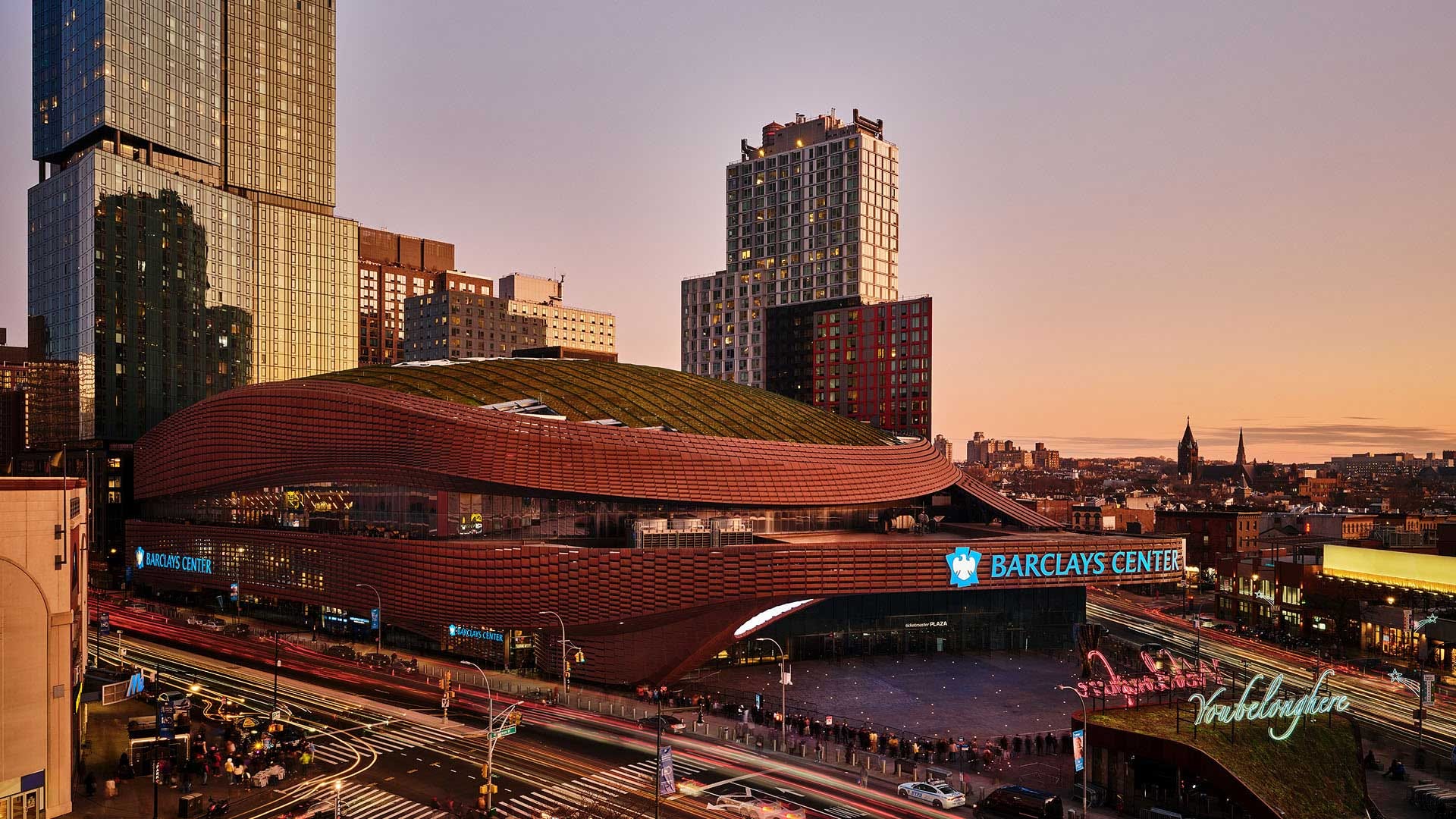
On Wednesday morning in courtroom 23B in the Southern District of New York, government lawyers read a text exchange between a Live Nation executive and the then-CEO of BSE Global, the company that owns the Barclays Center.
The text was sent by Live Nation VP Patti Kim to John Abbamondi, her friend, who, at the time, was considering replacing Ticketmaster as Barclays Center ticketing provider. Apparently, word had gotten out that Barclays was going to pick SeatGeek over Ticketmaster.
April 9, 2021, 10:55 p.m.: “Anyways should think about bigger relationship with Live Nation not just who is writing a bigger check (winky emoji),” Kim texted.
Abbamondi said he viewed the message as a warning from a friend about what could happen if Barclays left Ticketmaster.
At the time, the arena’s long-standing exclusive ticketing agreement with Ticketmaster was nearing its end, though the status of that contract was itself disputed. Abbamondi, who became CEO in 2020, said that one of his priorities after arriving was to negotiate a better deal.
SeatGeek, a rival ticketing service, had offered an attractive proposal. Abbamondi felt the pricing and technology were superior. Like any decision, it involved risks. The biggest, though, had little to do with either ticketing service.
Instead, he said, “The biggest risk was that Live Nation might retaliate against us and withhold events.”
While Live Nation owns Ticketmaster, they are supposed to operate in different lanes: Ticketmaster is a ticketing service contracted by venues, while Live Nation runs tours and artist performances. The government alleges that the joint company – made up of America’s largest promoter and ticketing platform – threatens and retaliates against venues that want to choose different ticketing services.
Wednesday’s testimony focused on these alleged threats and retaliation.
Not long after receiving the text message from Kim, Abbamondi said he called Live Nation to inform them that Barclays had decided to go with SeatGeek. At the end of the call, part of which was played in the courtroom yesterday, an irate sounding Michael Rapino (CEO of Live Nation) told Abbamondi that it was going to be tough to continue delivering concerts to the venue.
Sitting in the witness box in a navy suit with a neatly folded pocket square, Abbamondi said he interpreted the remark as “a veiled threat, maybe not so veiled.”
Allegations of Retaliation
Following the decision to leave Ticketmaster, Abbamondi said that Live Nation retaliated against Barclays. Despite an existing agreement for Live Nation to schedule a certain number of shows at Barclays, that year saw far fewer than previous years. Other promoters with these sorts of agreements, by contrast, did not substantially reduce the number of events they booked at the venue.
The “smoking gun,” Abbamondi said, came when Billie Eilish skipped Barclays during her 2022 tour. In 2020, Eilish was scheduled to play at both Barclays and Madison Square Garden, but these shows were canceled due to the eruption of the pandemic. Abbamondi said canceled shows are typically rescheduled at the same venue. When this tour was rescheduled, though, Barclays was skipped over. Eilish returned to Madison Square Garden and performed at the UBS arena instead of Barclays. Abbamondi said Live Nation told him this was Eilish’s choice, though one of Eilish’s managers reportedly said Live Nation had made the decision. The latter statement was objected to and excluded as hearsay.
The defense pointed out that the UBS arena was a fierce new competitor, and Barclays was internally aware that it could drive away business. The arena hadn’t even been built during Eilish’s first tour. Rapino’s statement, the defense suggested, was in reference to the increased difficulty to book as a result of this competition.
Minnesota Wild
Another witness described why some venues ultimately decide not to risk leaving Ticketmaster at all.
Mitch Helgerson, chief revenue officer of the Minnesota Wild hockey team, whose arena hosts a mix of sporting events and concerts, testified that in 2018 and 2019 his organization also considered switching its primary ticketing service from Ticketmaster to SeatGeek. At the time, SeatGeek was a new and relatively inexperienced primary ticketing service, but it came to the table with an advantageous offer, including $1 million more annually than Ticketmaster had offered, and Helgerson was interested.
In Helgerson’s first renegotiation meeting with Ticketmaster, he said they leveled “a credible threat” for what would happen if the venue left Ticketmaster.
The executives with whom he spoke allegedly said that if the venue chose another primary ticketing service, “Live Nation could move all their shows” to a competitor venue. That, Helgerson said, “would be almost catastrophic to our organization.”
Live Nation Retaliation Insurance
To ease the venue’s fears of Live Nation retaliation, SeatGeek came back with a proposal: “Live Nation Retaliation Insurance.”
SeatGeek agreed to pay the venue for any concert played at a rival arena on a day it had available. The idea was that if Live Nation retaliated, the venue would not lose cash. Ultimately, Helgerson said, “it would help, but it wouldn’t be enough,” as concerts provide value aside from cash.
After another alleged threat in 2019, Helgerson said he had pretty much made up his mind: The venue could not leave Ticketmaster. The two still have an exclusive agreement today.
It’s hard to know if the arena would have chosen SeatGeek had these alleged threats not been lobbed. Helgerson acknowledged that Ticketmaster was known, trusted, safe and dependable. SeatGeek did not yet have a record.
Barclays eventually went back to Ticketmaster in 2023. Abbamondi, who pushed for the SeatGeek contract, was let go less than two years after becoming CEO.
At the end of the day in court, the lawyers on both sides hammered out an agreement on an important matter, something of a rarity in this case. They will start providing lunch to the jury. Impressively, the jury has remained engaged throughout the trial thus far. No one has fallen asleep yet (except for the marshal in the overflow room yesterday, whose snoring unfortunately alerted the whole room).
Thanks for this. It's insane that LiveNation was ever allowed to buy Ticketmaster. Now they're the mob of entertainment.