


A week ago, Live Nation Entertainment CEO Michael Rapino was in Judge Subramanian’s courtroom announcing the secret settlement he made with the DOJ in this case. Yesterday, he returned for the most important testimony of his career, one that has the chance to make or break Live Nation.
Across from him was famed antitrust attorney Jeffrey Kessler, now representing the states. Kessler, who typically comes off as affable and endearing, spent the day on the offensive, aggressive and relentless in his questioning.
Rapino on Defense
Some of Kessler’s best work came from letting the story Live Nation sells to its investors speak for itself. The high ROIs, graphs and investor presentations described how the company maintains a successful “flywheel” between its various entities.
Rapino, in calls and emails to investors, boasted that Live Nation has outperformed the market for 20 years, is “recession-proof,” and that he had built "an incredible moat around the castle of Live Nation.” Following the merger of Live Nation and Ticketmaster, he told investors, “Although we didn’t brag about this during the DOJ years…we have incredible market power around the world.”
Kessler extrapolated details that made Live Nation’s conduct appear incredibly anti-competitive. He questioned Rapino about his relationship with Oak View Group, a venue management firm co-founded by the former Ticketmaster CEO.
In 2022, Live Nation signed a 10-year contract making it the exclusive ticketing service for OVG’s owned and managed venues. Rapino insisted the deal benefited OVG—and it surely did—but at what expense? When coupled with Live Nation’s existing dominance and other exclusive agreements, the line of questioning framed Live Nation and OVG as partners in segmenting the marketplace to benefit each other, while hiking ticket prices, boxing out independent promoters, and depressing artist compensation.
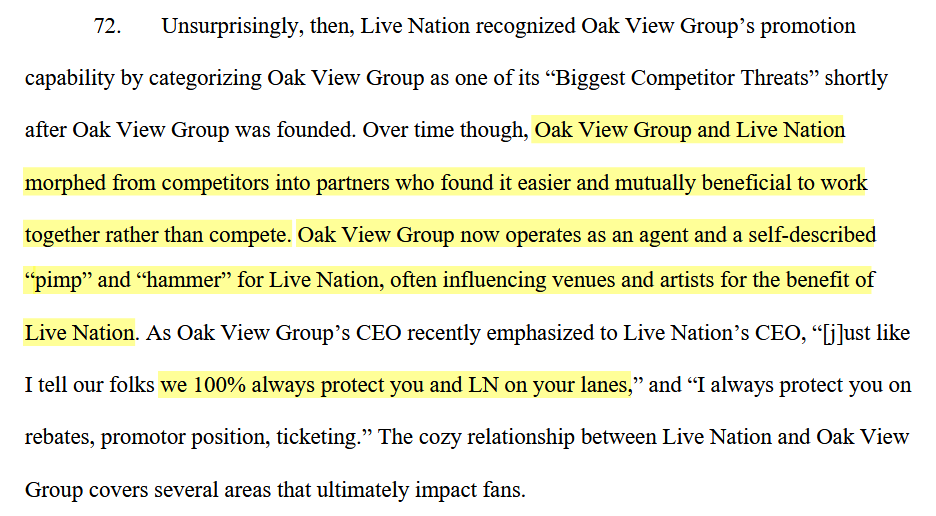
An executive from Paciolan, another ticketing company, testified on Wednesday that the OVG/Live Nation deal pushed his company out of several venues he previously ticketed without being given the opportunity to put in an offer for renewal.
The $15 Lawn Chair Ban
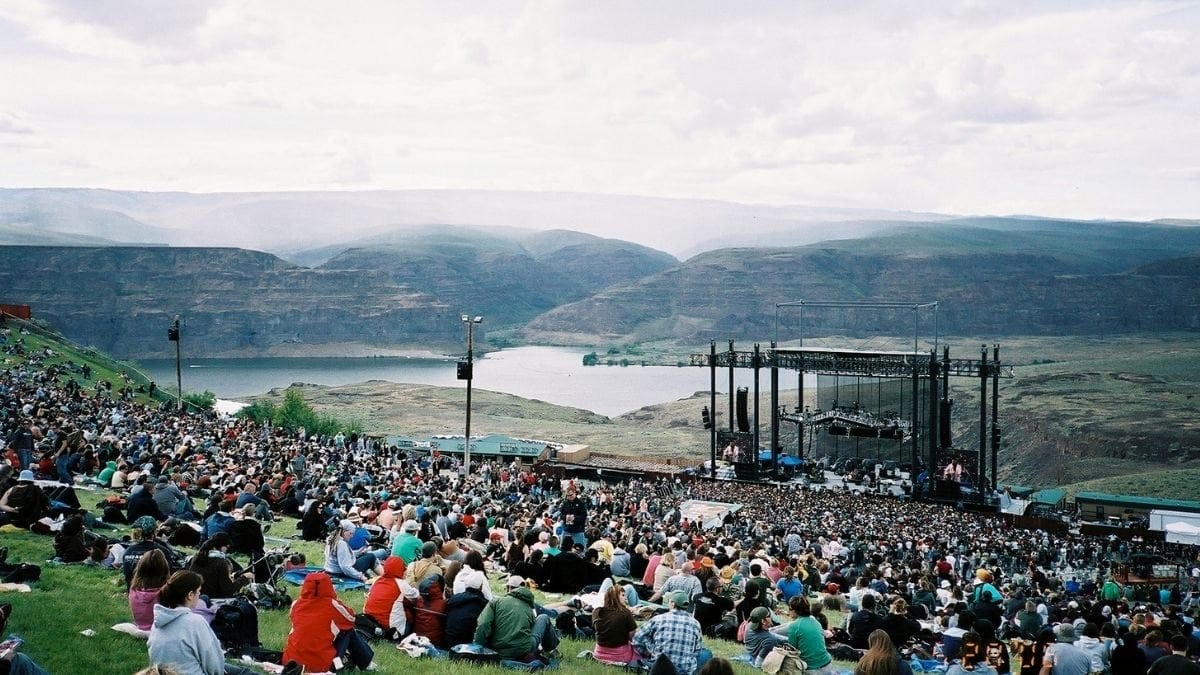
Smaller, more concrete examples of the company’s behavior appeared to resonate with the jury. Chief among these was Live Nation’s recently instituted policy banning fans from bringing lawn chairs to its amphitheaters. Instead, they are charged $15 a pop to rent one from the venue itself.
Rapino initially defended the policy as a safety measure, but that explanation fell apart when a Live Nation slide deck touted “higher penetration from policy to no longer allow lawn chairs in most venues.”
In less than a year, the lawn chair rental fee at just 12 amphitheaters resulted in a $7 million increase in revenue for the company.
Kessler Struggled to Paint the Full Picture
Of course, to succeed in this trial, the plaintiffs must prove that Live Nation is more than a big company with aggressive business tactics. While Kessler’s questioning pointed to discrete examples of Live Nation’s size and anticompetitive tactics, it didn’t quite coalesce into a single, persuasive story of a company exercising monopoly power to crush its rivals. He jumped abruptly from European ticketing systems to amphitheater tours to fan-club allocations to ticket fees without a clear through-line.
Having been on the case for little more than a week, Kessler appeared to lack the depth of understanding to fully connect his arguments or corner Rapino on the evidence. He misread data in several presentations, conflated Live Nation Entertainment entities and had no response when Rapino insisted the Taylor Swift ticketing fiasco was merely a cyberattack.
One might otherwise have forgotten how new Kessler is to the case had he not asked Rapino a question premised on the mistaken assumption that Rapino was at opening statements for this trial, which neither of them attended.
Rapino the Likeable CEO?
Rapino, by contrast, had clearly been preparing for this moment for much longer. After all, the DOJ first started investigating the company in 2018. It is not easy to appear likeable as the CEO of a multi-billion dollar company accused of being a monopoly, yet Rapino somewhat managed it. Though at times evasive, he was at others relatively charming. He repeatedly answered questions to which an objection was raised but not yet ruled on, and he joked about forgetting this courtroom “rule” nearly every time, including telling the plaintiffs they got a freebie, which elicited laughter from the jury.
Rapino skillfully re-framed the company’s actions as well-intentioned business decisions. He described Live Nation’s dominance in the amphitheater market as a product of necessity rather than pure ambition. He explained that arenas are prohibitively expensive; he has never been able to purchase one. Because he couldn’t compete in this market, amphitheaters “became this one segment where it seemed unique that we could participate,” he said. To allow other promoters to run shows in amphitheaters Live Nation had poured roughly a billion dollars into, would be akin to building a hotel and letting the “other guy” put rooms in it.
Rapino also addressed some of the controversies that have plagued the company throughout the trial. He disavowed the text messages sent from Ben Baker, calling them “disgusting” and “not the way we operate,” although after-the-fact rationalizations tend to hold less weight than past, contemporaneous musings.
During cross-examination, Rapino offered a compelling explanation for a phone call between him and John Abbamondi (then CEO of Barclays) in which Abbamondi claimed Rapino had threatened the Barclays Center after it switched from Ticketmaster to SeatGeek. From Rapino’s perspective, the purpose of the call was to give Ticketmaster a previously “promised” last-look to match competing offers. He was caught flatfooted when Abbamondi joined the call with a lawyer and announced that the decision had already been made. Then, when Abbamondi mentioned Live Nation, Rapino said he took it as an effort to entrap him in the event that Barclays’ Live Nation content decreased following the switch. He thus reminded Abbamondi of the new competitor coming to town (UBS), which would impact content irrespective of the promoter.
Rapino maintained that his goal is to continue increasing all of Live Nation’s ROIs. He intends to expand his existing share of the markets in which his business operates. He does not intend to slow down, although this trial might do so for him.
Whether this is enough is for the jury to decide. And with many more witnesses to come, the verdict is still out.